don Pedro
Pedro PáramoDon Pedro is the landowner whose private desires and economic decisions reshape Media Luna and Comala. He consolidates control by treating debts, marriage, law, labor, and armed force as instruments of the same authority. Yet the man remembered as the embodiment of rancor is also described as having loved Susana San Juan more than any other woman; after her death, his retreat from the world becomes a catastrophe for the people dependent on his estate.
Identity and Reputation
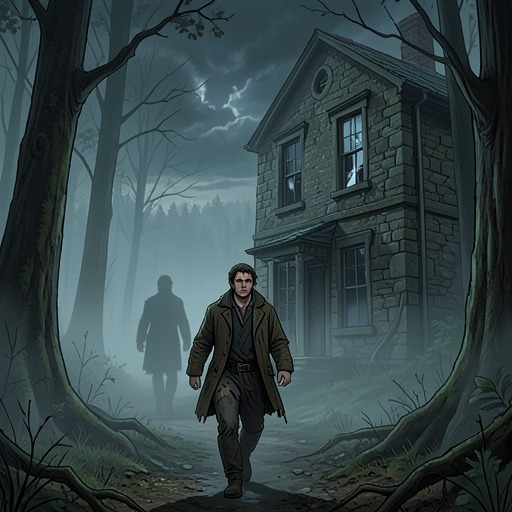
Don Pedro enters the novel’s network of recollections before the reader sees the full reach of his power. On the road to Comala, a fellow traveler identifies himself as another of don Pedro’s sons. As the travelers descend from the heights into oppressive heat, the companion describes Comala as a place of fire and invokes the image of the inferno. Asked who don Pedro is, he answers by characterizing him as rancor made flesh. The description gives the landowner a reputation that seems to extend beyond ordinary cruelty: Comala’s atmosphere and its inhabitants’ memories make his name feel like a local condition.
The image is sharpened by the contrast between his public reputation and the personal history disclosed in later conversations. He can be feared as the man who remakes the law to suit himself, while also appearing in recollection as someone fixed by grief, still facing the road along which Susana was taken to her burial. Neither image cancels the other. His authority over the estate and his inability to move beyond loss coexist in the story’s portrait of him.
Debt, Marriage, and the Expansion of Media Luna
When Fulgor Sedano reports that the estate’s affairs are failing and that its last cattle have been sold, don Pedro redirects the discussion from the amount owed to the identities of the creditors. He wants to know who is owed money. Fulgor explains that the Preciado family is owed the most and has received the least, and that Dolores Preciado remains mistress of the property at Enmedio. Don Pedro’s answer is to have Fulgor ask for Dolores’s hand in marriage on his behalf.
The proposal makes marriage part of a financial strategy. Don Pedro instructs Fulgor to tell Dolores that he loves her, then privately makes clear that her money is what matters. He orders the matter handled quickly and tells Fulgor that his duties as steward are over: he is to forget Media Luna. The arrangement joins a personal claim to a creditor’s property with the estate’s larger effort to control land. Don Pedro presents the desired marriage as a means of settling accounts, while the language of love supplies its acceptable face.
His dealings with Toribio Aldrete show how he treats property boundaries and legal procedure. When Aldrete’s claim threatens his plans, don Pedro tells Fulgor to dismiss the claim and, if necessary, pull down the fences. Asked what will happen to the law, he answers by asserting that they will make the law themselves. He directs Fulgor to bring a complaint against Aldrete, inventing an accusation such as usufruct if needed, and reminds him that Don Lucas Páramo is dead and new arrangements must now be made with him. The legal machinery does not restrain his acquisition of power; he proposes using it as another means of pressure.
Command over Land and Armed Power
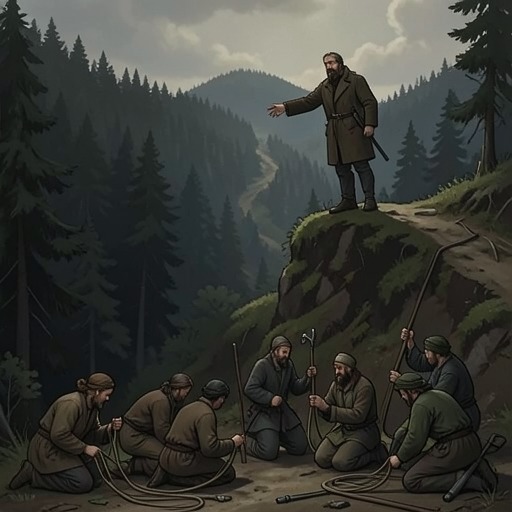
Don Pedro’s authority is practical as well as financial. During heavy rain, the great gate of Media Luna opens and mounted men stream into the countryside, in a movement that continues up to the two-hundredth rider. Fulgor Sedano directs them to drive cattle from Enmedio beyond the former Estagua and move other cattle to the heights of Vilmayo before the rains arrive. The scene registers the estate as an organized force: men, animals, routes, and weather are managed on a scale that reaches far beyond the household.
His encounter with armed rebels reveals a related flexibility. When one rebel explains that the group has risen against a corrupt government and against powerful local men whom they call thieves, don Pedro does not answer with an immediate threat. Instead, he asks how much the revolution will cost and offers that he might help. The rebels recognize the advantage of bringing a wealthy man to their side and invite an offer. The exchange shows don Pedro responding to armed opposition by treating support as a negotiable resource. His wealth allows him to approach upheaval not only as a danger but also as a force whose needs might be bargained with.
Susana San Juan and the Limits of Possession
Don Pedro’s pursuit of Susana San Juan exposes the personal desire beneath his command of other people’s lives. He tells Fulgor that she is the most beautiful woman the earth has borne and that he believed he had lost her forever. He does not want to lose her again. His proposed solution is to send her father back to work the mines and arrange for the older man to disappear in a remote place where few people go, leaving Susana an orphan whom don Pedro can protect. The language of protection masks a plan to remove the obstacle between himself and the woman he wants.
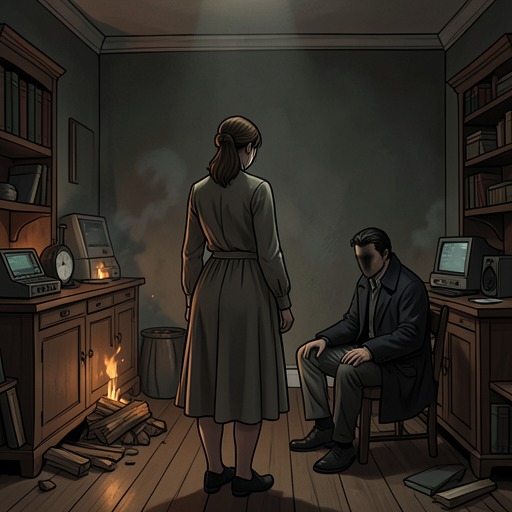
The later account of Susana’s final illness complicates that earlier strategy. She is brought to him sick and perhaps already mad, and he is said to have loved no woman as he loved her. After she is taken to the cemetery, he spends the rest of his days slumped in a chair, watching the road along which she was carried. He takes no further interest in anything. The account does not describe a love that heals or restores: even the depth of his devotion cannot undo her illness or keep her, and his grief becomes a withdrawal from the living world.
Withdrawal, Retaliation, and Aftermath
The bells rung for Susana’s death produce an especially bitter contrast. Comala’s inhabitants turn the days of mourning into a continuing celebration, with cockfights, music, drunken cries, and lottery sellers. At Media Luna, by contrast, the estate is silent; people walk barefoot and speak quietly, and few in Comala seem to notice Susana’s burial. Don Pedro remains in his room and resolves to punish the village. He declares that he will fold his arms and let Comala starve, and the account confirms that he carries out the threat.
This retaliation extends his personal bereavement into a collective consequence. Don Pedro’s estate had already organized land and labor around his control; once he withdraws his support, that dependence becomes a means of punishment. He abandons his properties, orders their contents burned, drives everyone away, and remains seated facing the road. The land is left to ruin and overrun by pests. Comala’s population dwindles as people leave for other sources of water and sustenance; some depart intending to return, then forget their families, possessions, and village. Others stay because they have nowhere else to go or hope that don Pedro will die and leave them property. Years pass, and he remains at Media Luna like a scarecrow set before its fields. His stillness is not a restoration of order: it marks the prolonged collapse of the estate and the community shaped by his power.